

PI: Robin Hartanto Honggare
Supported by NUS Start-up Grant; Carter Manny Research Award
By the late nineteenth century, private companies and colonial authorities had transformed Sumatra into a primary site for testing and producing global cash crops. Central to this intermingling of world commerce and colonial pursuit was the plantation system, which mobilized environmental techniques and imaginaries to reshape built environments for monoculture. This book traces the history of plantation architectures by examining the conversion of communal land into agricultural concessions and the creation of extensive building networks sustaining commodity production along Sumatra’s east coast. Drawing on unpublished sources, including land contracts, plantation maps, archival photographs, and institutional reports, this project argues that architecture not only mediated plantation practices but also systematically transformed land, labor, and ecology into commodities.
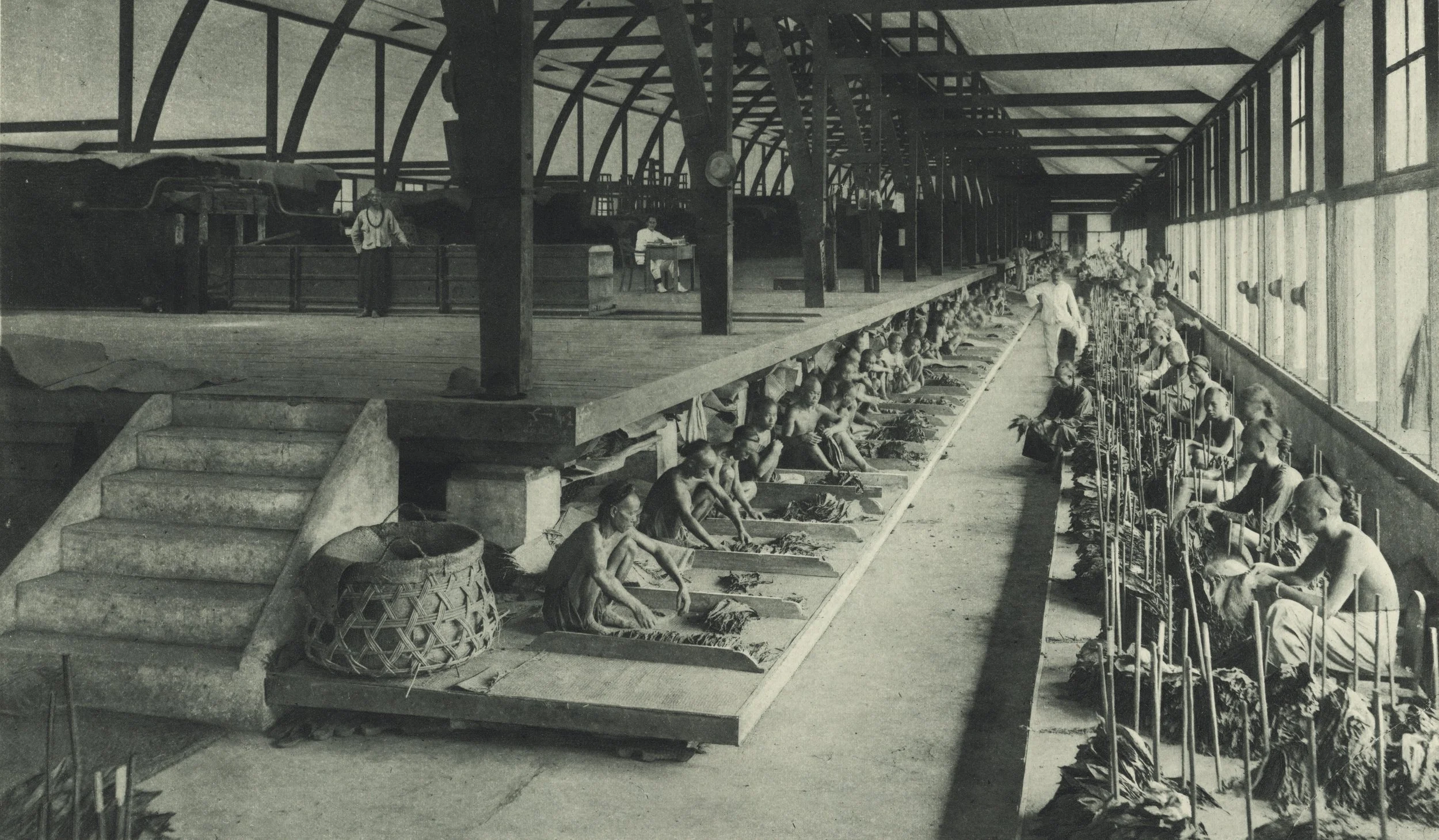
Interior of the tobacco fermentation barn at Poengei Estate, 1905. The image shows indentured labourers sorting tobacco leaves based on colour. Photograph by C. J. Kleingrothe. Courtesy of Leiden University Libraries, KITLV 88327.
