
PI: Saptarshi Sanyal
Supported by: NUS Start-up Grant (2025–2029); UK Commonwealth Scholarship (2018–22).
Between the 1910s and the 1940s, educational, artistic, scientific, and spiritual experiments across colonial India generated novel architectural and spatial practices that questioned prevailing, predominant paradigms of modern life. Emerging largely outside imperial patronage, these initiatives brought Indian thinkers, educators, artists, workers, and patrons into collaboration with interlocutors across Europe, Asia, and beyond. This book examines how their exchanges produced experiences of modernity through the making of buildings, institutions, and landscapes. Its empirical core spans three investigations: the educational and architectural landscape of Santiniketan in eastern India; the material and social processes underlying the construction of Golconde, a dormitory in French-governed Pondicherry; and the overlooked practice of artist and self-taught architect Surendranath Kar across the subcontinent.
Drawing on multilingual writings, correspondence, construction diaries, visual records, architectural documentation, and fieldwork, the project develops a connected history of architectural production across these projects and their milieux. It argues that the production of architecture and built environments through collaborative processes of building and inhabiting space actively generated critiques of imperialism, nationalism, and dominant cultural paradigms of modernism. The project brings architectural history into conversation with construction history and foregrounds the distributed nature of architectural authorship. It illuminates the relationships, labour, learning, and affective commitments through which modernity took shape. In doing so, it challenges accounts organised around stylistic categories, singular authorship, or bounded national geographies, and places architectural processes within the social and cultural histories of modern South Asia.
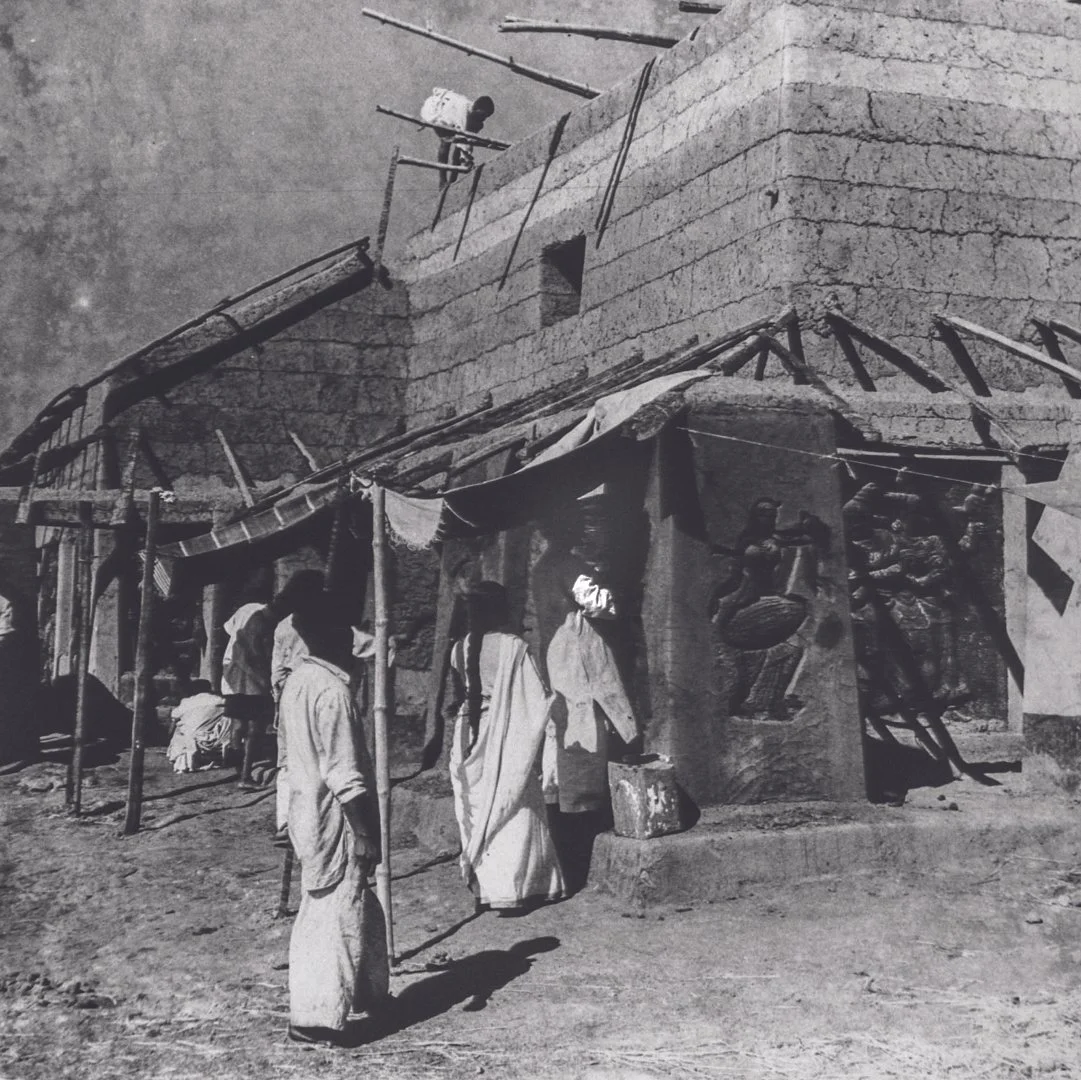
Kalo-bari (Black House) under construction in Santiniketan, ca. 1936; Source: Rabindra Bhavan Archives Photo Collections, Santiniketan [Acc no. 14867H]