

PI: Jiat-Hwee Chang
Supported by a Ministry of Education Tier 1 Academic Research Grant
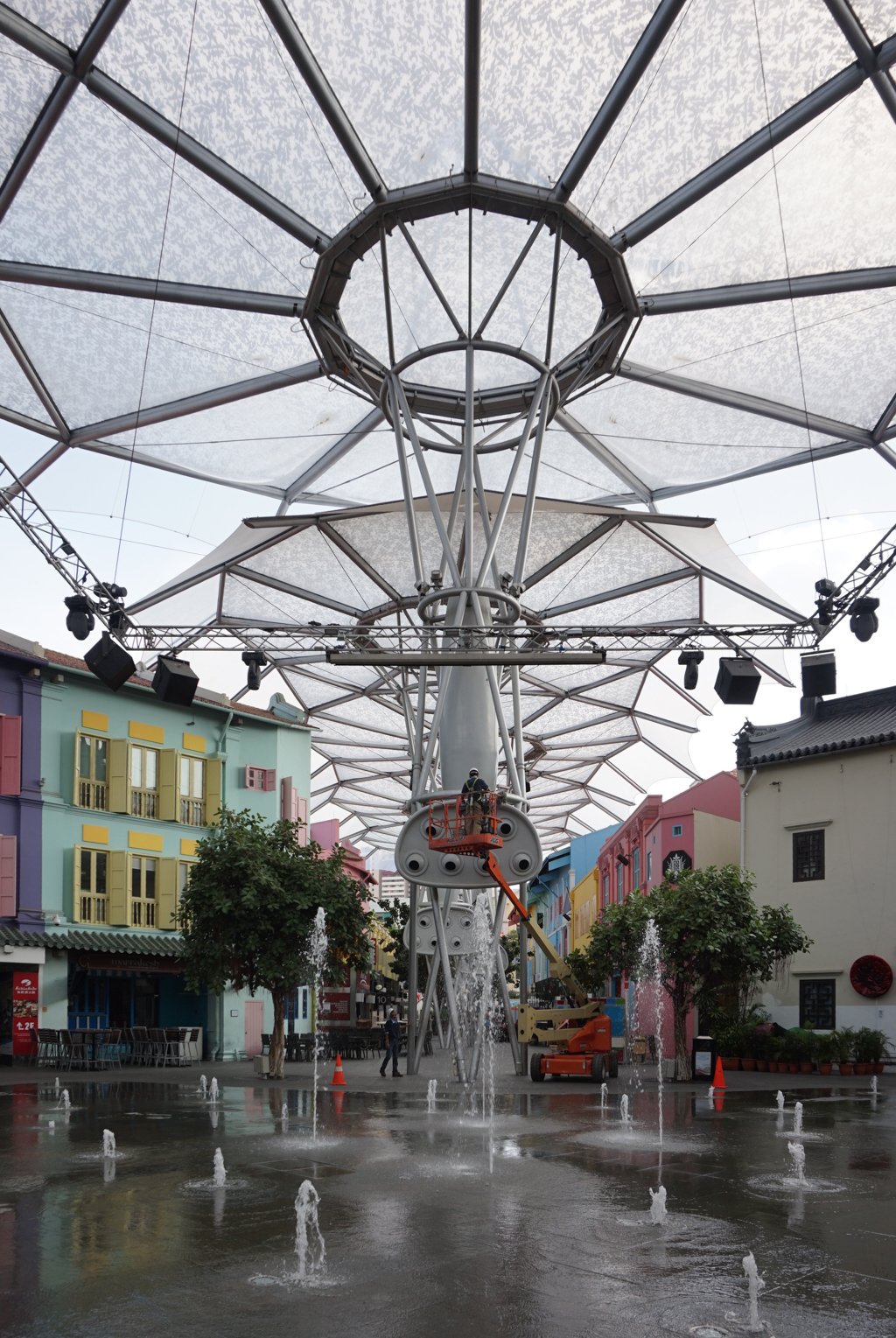
TAs temperature rises and heat waves become more frequent and intense due to the climate crisis, cooling technologies, particularly air conditioning, have received much attention from global environmental NGOs, researchers, and policy makers. The demand for air conditioning is projected to surge, especially in the hotter regions of the Global South. As air conditioning is an energy-profligate technology responsible for a large proportion of energy used in buildings, which in turn made up a significant percentage of global energy consumption, the projected rampant growth of air conditioning usage will increase carbon emission and exacerbate climate change. Hence, the key challenge seems to be: how do we cool the world’s population without further warming the planet?
This research seeks to answer this question by studying how societies in Singapore and Doha have planned and designed their built environment to deal with heat historically. It focuses on two historical moments: the transition into air-conditioning dependency in the 1970s and 1980s, and the on-going transition away from air-conditioning dependency that started around 2010. Singapore and Doha are chosen as cases because they are located in understudied hot regions—Southeast Asia and the Middle East— where demands for air conditioning usage have been projected to grow exponentially. Although Singapore and Doha might be seen as exceptional in the region due to their economic affluence and “addiction” to air-conditioning, they are in fact socio-environmentally heterogeneous entities representative of the regional complexities.
Building on the recent interdisciplinary scholarship on thermal material culture and thermal politics that goes beyond technocentric approaches to understand cooling technologies in relation to societies, this research uses the concepts of thermal regime and thermal governance to provide insights into the social, cultural, political, and material entanglements of cooling technologies, particularly air conditioning.
