
Written by Saptarshi Sanyal
Published In: Manish Chalana and A.K. Jayant (eds.), Heritage Conservation in Postcolonial India (New York: Routledge, 2020), pp. 25–40.
This chapter reassesses the Archaeological Survey of India’s (ASI) capacity for institutional change through the author’s experience as an in-house conservation architect between 2010 and 2013. Examining conservation projects at the Sun Temple, Konarak and the Ahom monuments in Sivasagar shows how historical research, architectural documentation, material assessment, and local knowledge informed interventions and challenged established priorities. These projects shifted attention from cosmetic repair and tourism-led beautification towards sustained investigation, monitoring, and conservation planning. They also strengthened staff expertise and collaboration across archaeology, engineering, and conservation. Challenging perceptions of the ASI as resistant to change, the chapter argues that responsible heritage management depends on continuous institutional engagement and investment in internal professional capacity, ultimately advocating that strengthening the agency’s public mandate through research-led practice and treating conservation as an ongoing process becomes increasingly urgent.
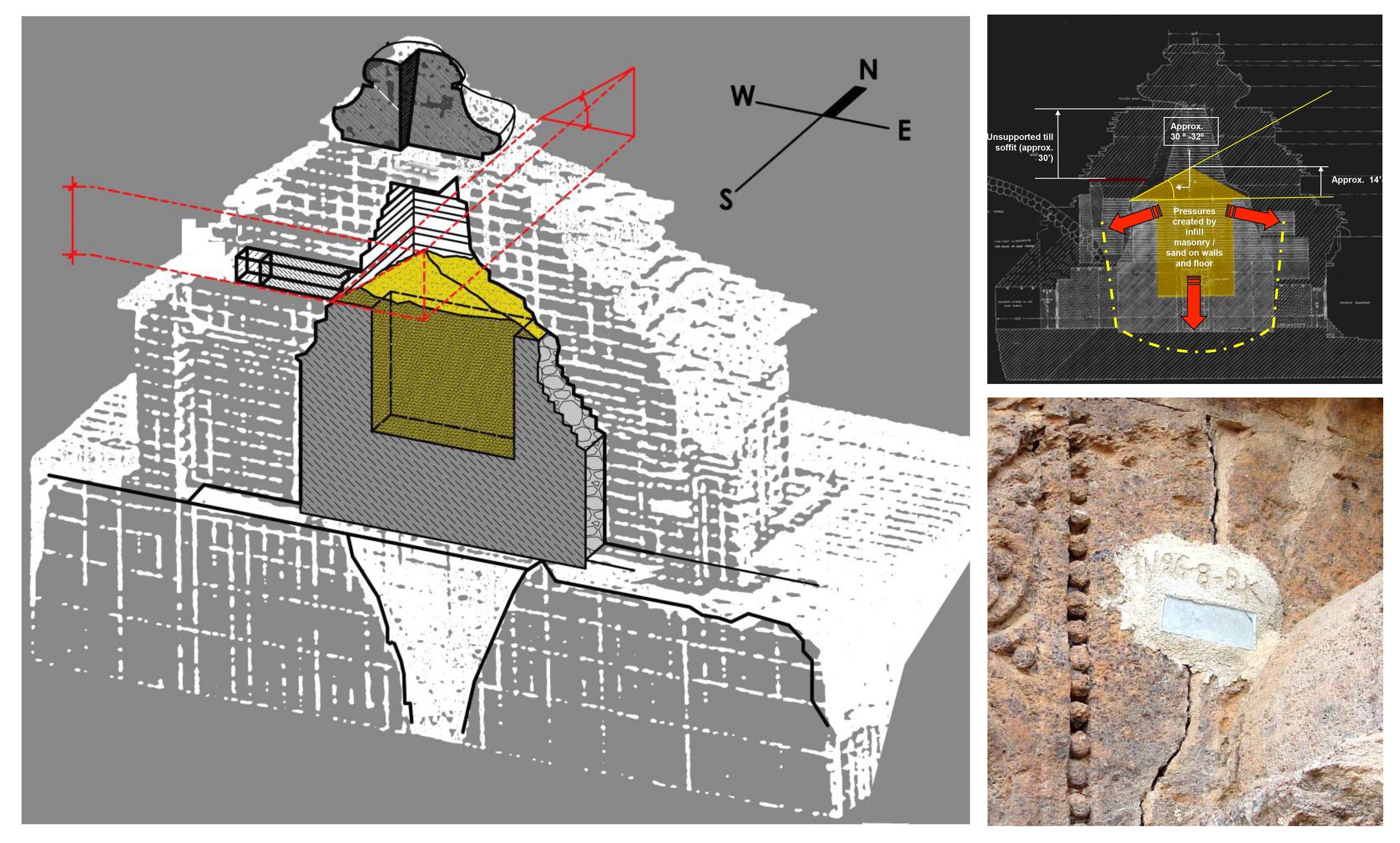
Structural condition of the interior of the Sun Temple, Konarak, India; drawing by the author (2010).